
Filtering by: Events

Harnessing Big Data Partnerships for National SDG Monitoring and Reporting: Exploring Opportunities, Challenges, and Best Practices
Jul
14
9:00 AM09:00

Harnessing Big Data Partnerships for National SDG Monitoring and Reporting: Exploring Opportunities, Challenges, and Best Practices

WHAT

Harnessing Big Data Partnerships for National SDG Monitoring and Reporting: Exploring Opportunities, Challenges, and Best Practices

WHERE

Online

WHEN

Wednesday, July 14, 2021 from 9:00 AM – 10:00 AM EST

About the Event

National governments are central to monitoring and reporting on the Sustainable Development Goals (SDGs), yet significant data gaps still remain in assessing country-level progress.  In recent years, big data has grown considerably, becoming increasingly valuable for use by National Statistical Offices (NSOs) for more timely, granular, and accurate data at reduced costs and reporting burdens. And while big data has great potential to support national monitoring of the SDGs, these benefits must be weighed against a number of challenges and risks, including methodological problems, technical skills and capacity gaps, sustainability and access issues, and data privacy and security concerns. Moreover, despite some country advancements in using big data to support their SDG monitoring, applications to date remain limited. To address these challenges and effectively harness big data for national SDG monitoring, increased collaboration and partnership between NSOs and a broad range of partners across sectors are needed. 

On the sidelines of this year’s High-level Political Forum on Sustainable Development (HLPF), SDSN TReNDS and Partners for Review (P4R) will organize an event in which leading experts will discuss their experiences working with big data partnerships to support national SDG monitoring and reporting. This will include a discussion of emerging big data innovations for the SDGs, key challenges and barriers encountered during the partnership process, as well as practical steps for ensuring successful big data partnerships and long-term sustainability. During the event SDSN TReNDS and P4R will launch a jointly produced report and an accompanying digital repository on ‘Big Data and the Sustainable Development Goals: Innovations and Partnerships to Support National Monitoring and Reporting’.

Moderator/Panelists

  • Grant Cameron, SDSN TReNDS Director (Moderator)

  • Thomas Wollnik, Head of Programme, P4R

  • Cameron Allen, SDSN TReNDS’ Senior Advisor and Adjunct Research Fellow at Monash Sustainable Development Institute

  • Rachel Bowers, ODI Fellow, Secretariat at the Ghana Statistical Service

  • Monica Scannapieco, Head of Division at ISTAT Enterprise Architecture, Big Data

  • Tim Harris, User Engagement Lead, FCDO Data Science Hub

View Event →
 
Harnessing Innovation for a Sustainable Future: Bridging the Policy, Research, and Community Divide
May
3
7:45 AM07:45

Harnessing Innovation for a Sustainable Future: Bridging the Policy, Research, and Community Divide

WHAT

Harnessing Innovation for a Sustainable Future: Bridging the Policy, Research, and Community Divide

WHERE

Online

WHEN

Monday, May 3rd from 7:45 am to 9:00 am EST

About the Event

The COVID-19 pandemic has brought about mass global disruption and presented a significant setback to the achievement of the Sustainable Development Goals (SDGs). Yet, it has also paved the way for more science-informed decision-making, enabling the research, scientific, and policy communities to join together like never before, and proving the importance of interdisciplinary approaches to combating the crisis, developing effective policies, and accelerating innovation. 

On the sidelines of the UN Multi-Stakeholder Forum on Science, Technology, and Innovation Forum, join Springer Nature and the UN Sustainable Development Solutions Network (SDSN) for a special virtual debate on how to bridge the divide between the research and policy communities to accelerate innovation on the SDGs and build resiliency post COVID-19. The debate will also draw on insights from a new white paper on how to foster greater collaboration and inclusive problem-solving between these communities.

The event will feature a keynote by María Cortés Puch, Vice President of Networks at SDSN, and Laura Helmuth, Editor-in-Chief of Scientific American, will moderate the debate. Panelists will include:

  • Magdalena Skipper, Editor-in-Chief, Nature

  • Cameron Allen, Adjunct Research Fellow at Monash Sustainable Development Institute and Senior Advisor, SDSN TReNDS

  • David Smith, Director of the Center for Environmental Management, University of West Indies, and Coordinator of the Institute for Sustainable Development

  • Aparajita Banerjee, Post-Doctoral Research Fellow at University College Dublin

View Event →
 
How to Use Data to ‘Build Back Better’ Post-Covid-19
Mar
24
10:00 AM10:00

How to Use Data to ‘Build Back Better’ Post-Covid-19

WHAT

How to Use Data to ‘Build Back Better’ Post-Covid-19

WHERE

Online

WHEN

Wednesday, March 24th from 10:00 am to 11:00 am EST

About the Event

Data has proven integral in the fight against the Covid-19 pandemic – helping to track its
spread, understand the virus’s effects on citizens, and inform strategies to prevent transmission.

As governments begin to implement their recovery strategies and work to ramp up their
vaccination efforts, it will continue to prove invaluable.

This workshop will provide you with insights on how to best use data to inform your organisation’s recovery efforts and implement effective strategies. The workshop will also highlight practical approaches and guidance from practitioners who are dealing directly with the crisis ‘on-the-ground’ and share lessons learned.

View Event →
 
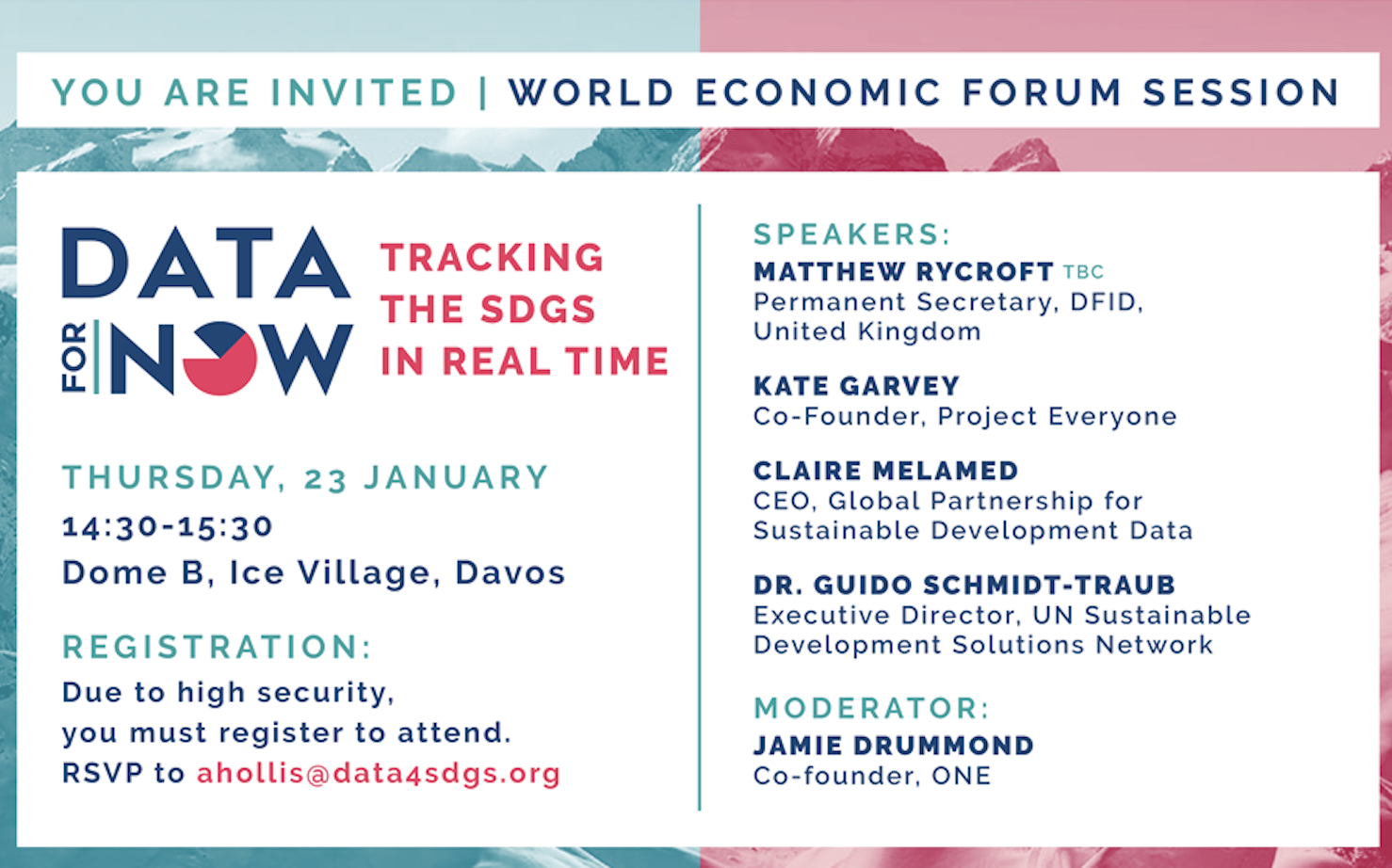
Working to Improve Timeliness and Granularity of SDG Data: Progress Made in the Data for Now Initiative
Feb
16
11:00 AM11:00

Working to Improve Timeliness and Granularity of SDG Data: Progress Made in the Data for Now Initiative

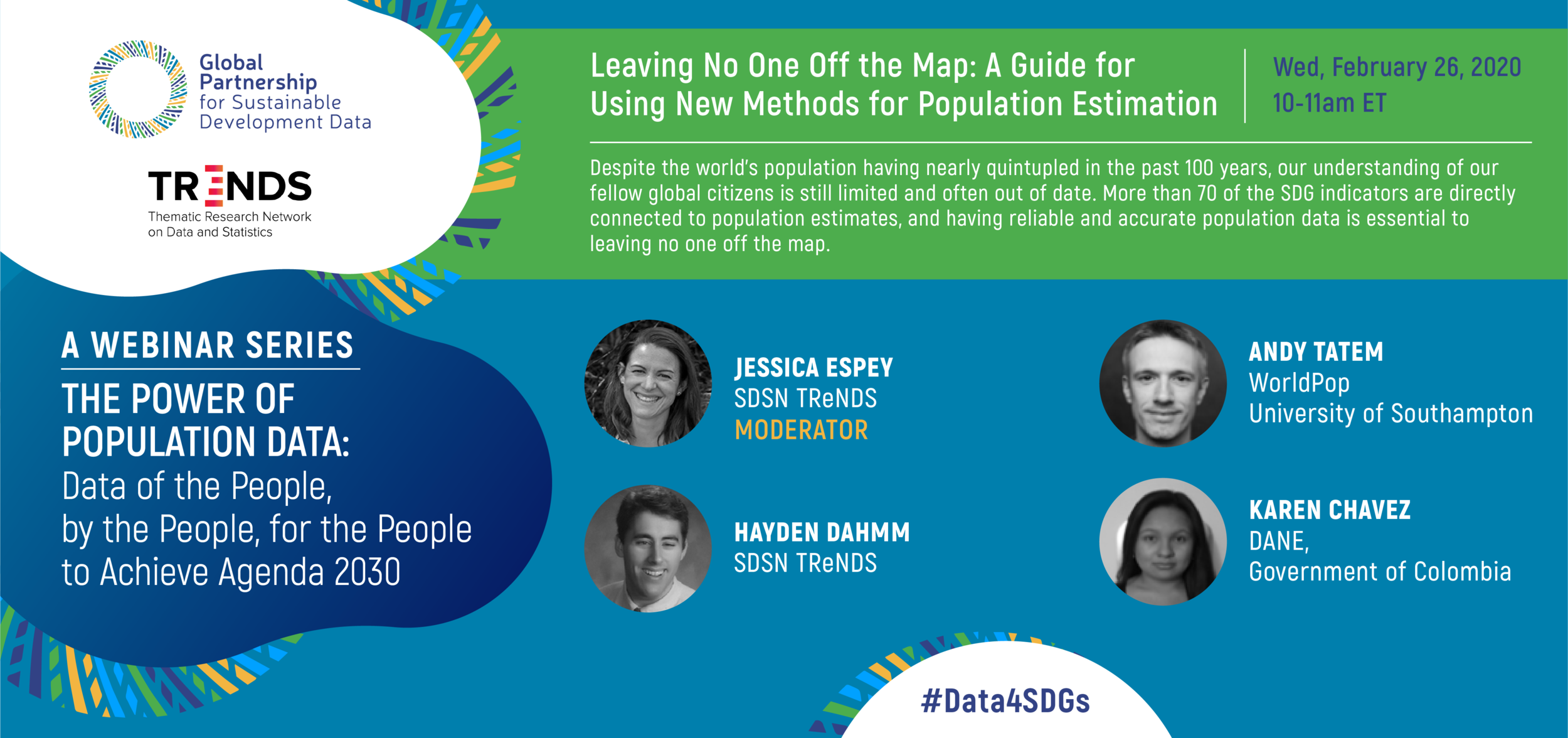
To develop policies and programs, policymakers often depend on traditional data sources, such as household surveys and population censuses. However, in many countries, these data sources can often be years, even decades out of date. Fortunately, gridded population data are being used to supplement these data sources and enable countries to produce more timely data for decision-making.

View Event →
 
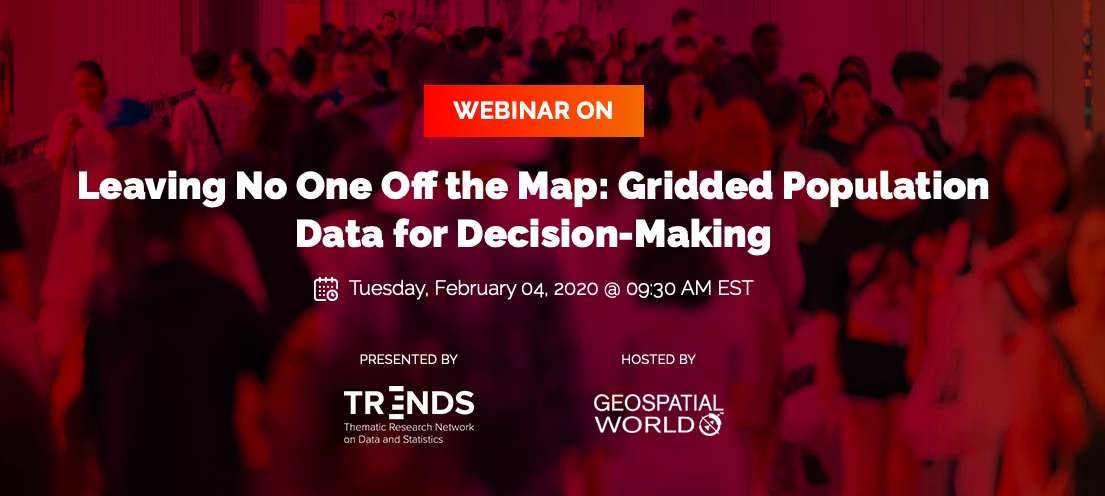
Leaving no one off the map in practice: How can gridded population data help governments meet the Sustainable Development Goals?
Dec
11
7:00 PM19:00

Leaving no one off the map in practice: How can gridded population data help governments meet the Sustainable Development Goals?

To develop policies and programs, policymakers often depend on traditional data sources, such as household surveys and population censuses. However, in many countries, these data sources can often be years, even decades out of date. Fortunately, gridded population data are being used to supplement these data sources and enable countries to produce more timely data for decision-making.

View Event →