This year’s session of the High-Level Political Forum (HLPF) culminated earlier this week, with 44 countries presenting their Voluntary National Reviews (VNRs) and hundreds of country delegates, leaders, and key stakeholders convening to discuss progress on the Sustainable Development Goals (SDGs). We review some of the key highlights discussed, including the importance of data infrastructure and timely, disaggregated data, the need for greater investments and financing for countries, and the value of localized and customized approaches to achieve the SDGs.
Read MoreDigital transformation – particularly the role of and the expansion of digital public goods – has become an increasingly central part of the discussion on how we tackle the Sustainable Development Goals (SDGs) and what experts are calling the “most consequential geopolitical and geo-economic moment of the past three decades.” And these conversations are ripe throughout the global development space, particularly at the supra-national level. In this blog, TReNDS’ Alyson Marks highlights recent advancements to the digital transformation agenda and lessons the data community should consider to expand its influence.
Read MoreIn a new blog series on staff perspectives, TReNDS’ Research Manager, Castelline Tilus, reflects on her experiences working in a data science lab in Haiti.
Read MoreThe growth of Earth Observation data (EO) has skyrocketed over the past few years with technological advancements and a surge in new technologies. With these technologies, users can add more granularity, temporal, and localized information to their data. And the rise in EO shows no signs of slowing down anytime soon. According to a recent analysis by Morgan Stanley, space-borne EO’s value is expected to exceed $25 billion USD by 2040. Additionally, a recent assessment highlights that existing EO systems could generate data for 33 Sustainable Development Goals (SDGs) indicators across 14 goals. Consequently, governments are increasingly using this data for evidence-based decision-making on sustainable development challenges. Yet, countries in the Global South, particularly in Africa, continue to face challenges with harnessing the breadth and complexity of EO data for decision-making on sustainable development issues. TReNDS’ latest research paper explores the bottlenecks to use and the types of partnerships that may prove beneficial to overcoming these challenges.
Read MoreCities have been leading on innovation to improve civic outcomes for decades – with the origins of the “smart cities” revolution first taking shape in 1970s Los Angeles. Yet, the growth of “smart cities” along with the surge in new technologies and a global pandemic have contributed to the unprecedented data collection, production, and analysis demands facing national and local governments today. In response, a number of cities around the world have recently instituted a Chief Data Officer (CDO) position to improve their data stewardship for better service delivery and policymaking. To better understand how the experiences of CDOs at the city and sub-national levels can help to inform their national counterparts, SDSN TReNDS conducted initial research on this issue, and this blog highlights a number of emerging findings for National Statistics Offices.
Read MoreWhile it may serve as a surprise to some, citizen science has been around for thousands of years. With the influx of new technologies in recent years, such as mobile applications and remote sensing, citizen science has grown in popularity as researchers, governments, and citizens are now able to more seamlessly collaborate. In particular, citizen science has become a critical tool for helping to measure progress on the Sustainable Development Goals (SDGs), as well as fill data gaps. TReNDS’ expert members’ research, work at the country-level, as well as recent discussions on citizen science have helped to highlight the use of citizen science to fill important data gaps, the value of multistakeholder partnerships to mobilize citizen science initiatives at the local level, as well as the importance of garnering national buy-in.
Read MoreAt this time of the year, there is no shortage of predictions of what lies ahead. Typing “year ahead 2022” into your web browser alone yields 885 million results – more than one for every ten people on the planet. And for big data enthusiasts, limiting the search terms to “year ahead,” “big data,” and “2022” returns 300,000+ articles covering data trends, top tech predictions, and what we can expect from big data analytics. The results are spottier, however, when we search for what’s in store for national data ecosystems and the implications for sustainable development. Yet, efficient national data ecosystems and better use of data are critical to helping organizations from the public sector, private sector, and civil society achieve better outcomes, particularly in sustainable development. TReNDS’ Director, Grant Cameron, reflects on how these types of organizations will evolve in their use of data in the year ahead, what it means for the national and global data ecosystems, and how these changes will contribute to sustainable development.
Read MoreWhile the global landscape has rapidly shifted over the past several years, it’s no secret that countries from the Global South continue to be under-represented in research, often marginalized, and in some cases, even exploited. Fortunately, the power dynamics are beginning to change. In recent years, South-South collaboration has been particularly active in the data space, with more open source tools and new data sources, including citizen science, being generated at the local-level to inform decision-making. To help bolster this shift, TReNDS’ sub-group on North-South Exchange is working to crowd in more voices from the Global South as well as encouraging more documentation, discussion, and diffusion of lessons learned to catalyze South-South and triangular data collaborations. Recent conversations and members’ research have underscored the significance of involving local stakeholders in projects from the onset, customizing needs based on the local context, and developing local communities of practice to ensure long-term sustainability.
Read MoreIn many places, local governments have been at the forefront of innovation around data for sustainable development. For years, cities have been combining traditional and novel data sources to measure performance and benchmark against other cities, to create dashboards to inform citizens, and to advance local policymaking. TReNDS’ research on data governance and stewardship at the municipal and local levels illustrates how national governments and international organizations can benefit from the lessons learned around cities’ approach to data stewardship.
Read MoreNew data sources and innovative approaches using big data techniques, spatial analysis, predictive modeling, and other technologies are creating a range of new datasets that can help measure and monitor SDG-related targets and indicators. And while data availability is vital to tackling any global agenda, more data does not always guarantee good decision-making. To take meaningful action–whether it be a global crisis, like the COVID-19 pandemic, or the recent earthquake in Haiti–policymakers and other SDG stakeholders must understand what data are fit-for-purpose. Earth observation (EO) and remote sensing products have emerged as an important source of data that present an opportunity to monitor environmental, agricultural, and other SDG-related indicators in fine temporal and spatial resolutions. With the increase of near real-time information, how do users identify the best-suited data source for their application of interest?
Read MoreCalls for open data, data sharing, data accessibility, and data literacy often coincide with this positive outlook on data as a democratizing force.
Read MoreThe SDGs present an unprecedented monitoring challenge, and the potential for ‘big data’ to support these efforts has incited considerable enthusiasm.
Read MoreMany cities are leading the path to ‘build back better,’ particularly “smart cities,” which use data and information technology to connect and integrate urban systems and services to enhance the efficiency of resource utilization, optimize urban management, and improve the quality of life for citizens. These data-driven cities responded better in the face of the COVID-19 pandemic thanks to smart infrastructure and data analysis. Fortunately, COVID-19 has accelerated the trend towards “smart cities,” and with the upcoming Urban 20 Mayors Summit, the G20, the wider international community should focus on allocating the necessary resources to increase smart city development globally to help ensure that cities are more resilient against future pandemics and crises.
Read MoreReading the news, it is easy to be overwhelmed with dire environmental statistics and data. Yet these numbers can disguise the serious gaps that remain in our understanding of the environment and the impact humanity is having on the natural world. Although in some respects, more data are being produced now about the environment than ever before, there is a clear need to leverage existing data to produce meaningful statistics, and a greater focus should be placed on expanding our environmental data collection and production efforts using new methods and data sources. Fortunately, some noteworthy advances have been made recently, and today, on the 51st anniversary of Earth Day, we should commit to continuing this progress.
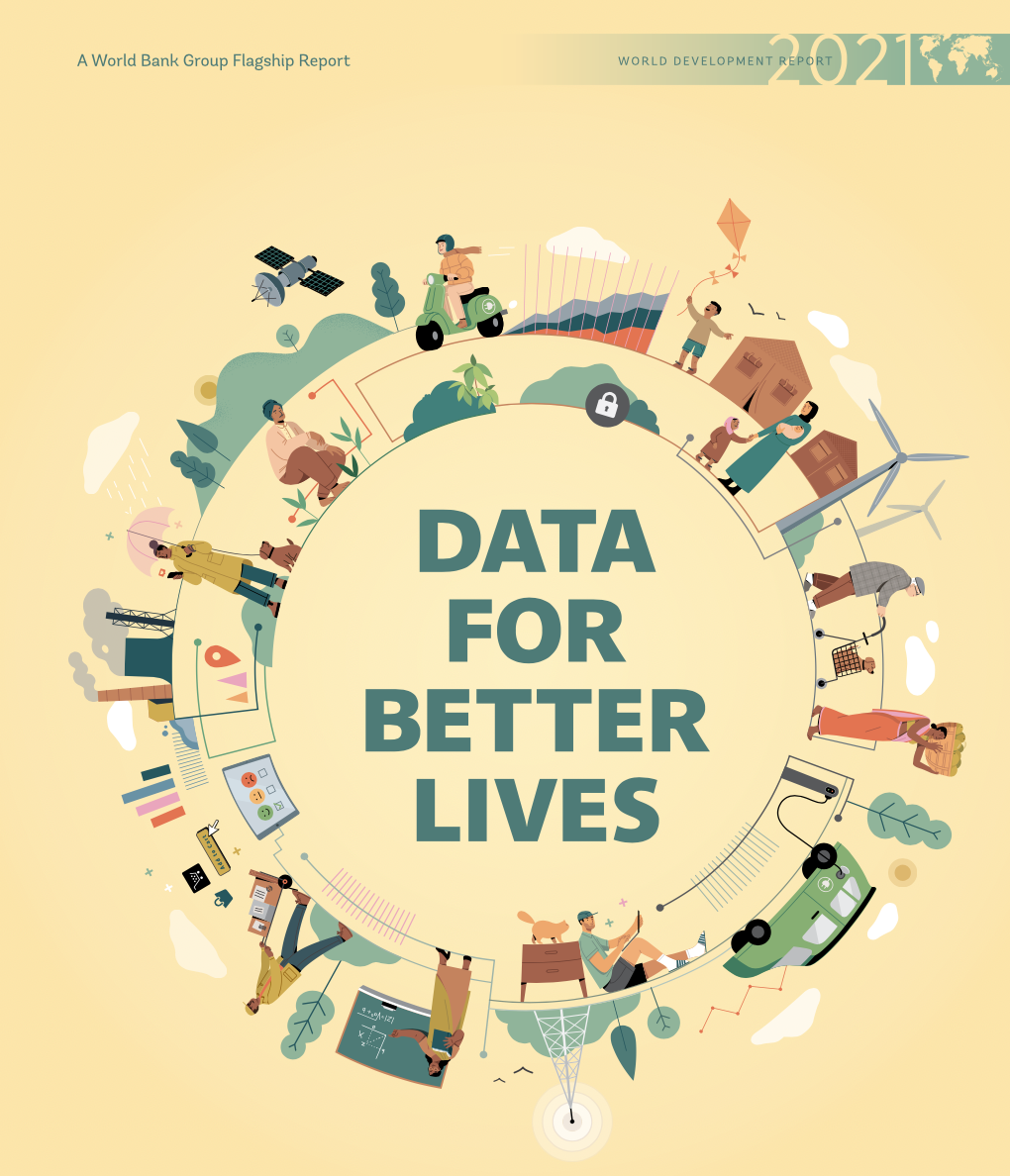
Read MoreIn this blog, TReNDS’ Director, Grant Cameron, reflects on the newly released World Bank’s 2021 World Development Report, highlighting its most notable contributions and areas for improvement.
Read MoreHaving accurate and timely gender data is critical to developing effective policies and programs to ensure that no one is left behind. In this blog, Chisato Kimura and Alyson Marks review the potential for citizen science to help fill the acute gender data gaps facing many countries around the world.
Read MoreEven while the COVID-19 pandemic has heightened awareness of data and statistics, it has highlighted the global divide in statistical capacity, and in many cases, exacerbated it. Across Africa, for example, incomplete death registration systems have hampered efforts to track the virus. And according to recent surveys of national statistical offices (NSOs), nine out of ten NSOs in low and lower-middle-income countries may not fully be able to meet their international reporting requirements. To address these issues, countries are now being presented with an array of private sector data solutions and other non-traditional sources of information to fill these data gaps. Yet as global institutions seek to empower with data, we must be wary of “data colonialism” — the potential for the powerful, data-rich countries and corporations in the Global North to undercut capacity development in the Global South by failing to recognize the local contexts.
Read MoreAround the world, racial and ethnic disparities are rampant across all sectors of society; from inequities in healthcare, education, and employment to housing, wealth, and criminal justice. Indigenous peoples and racial minorities are also systematically undercounted in censuses. COVID-19 has exacerbated these issues, as people of color, especially Black people, have been disproportionately impacted by the pandemic, both in terms of cases and deaths. Yet much of the COVID-19 data, including on vaccinations, is still not being disaggregated by race or ethnicity, further hampering governments’ ability to formulate effective policies to respond to the pandemic. With over a year since the first COVID-19 case and the rise of new variants and a resurgence in cases globally, countries must do better to disaggregate their data by race and ethnicity.
Read MoreThe rapid global spread of COVID-19 has demanded that governments respond at breakneck speed to limit the human and economic costs of the crisis. And the scale of government response is unprecedented – a staggering 11 trillion USD in fiscal support provided by 55 countries in a matter of months – as is the demand for timely data to ensure that resources are targeted where they are most needed. Having accurate and timely data has become the foundation of a resilient and effective government, and national statistical systems are central to this. These systems have been placed under extreme pressure during the crisis. Temporary office closures and disruptions to operations and surveys have jeopardised dozens of statistical publications. Increased demand for new and more timely data on the impacts of the pandemic have stretched available resources. And pragmatic decisions have had to be made to reprioritise and redeploy staff and resources as well as to innovate to deliver new statistical products.
Read MoreNew methods of data collection have the opportunity to create a timelier, more detailed understanding of sustainable development challenges. For example, earth observation (EO) data has been identified as a tool for monitoring a wide range of issues, including agriculture, health, cities, and biodiversity at often more frequent and granular levels, and has also proven essential during the current pandemic. Additionally, last month, SDSN in collaboration with Esri launched SDGs Today, a platform of timely data sources related to the Sustainable Development Goals to provide users with a snapshot of the state of sustainable development. Although new methods can provide valuable insights, they need to be treated with caution as they are not replacements for existing methodologies.
Read More